Monday, 18 March 2013

Pablo Picasso


Pablo Ruizy Picasso, born on 25th October 1881 and died on 8th April 1973) is a Spanish painter, sculptor, printmaker, ceramicist, and stage designer who has spent his life in France as one of the most influential artists of the 20th century and was widely known for his painting portraits from Cubist movement.

He was mostly influence by making constructed sculpture and co-invention of collage and for the wide variety of styles that he helped develops and explore.

He died on 8th April 1973 aged 91 in Mougins, France Pablo while he and his wife Jacqueline invited their friends for dinner and he entertained them, saying his last words before he died "Drink to me, drink to my health, you know I can't drink anymore."

He was buried at the Chateau of Vauvenargues near Aix-en-Provence, a fortified bastide in the village where he was taught in 1958 and got married to Jacqueline Roque ‘between’ 1959 to 1962.

Jacqueline didn’t allow his children ‘Claude and Paloma’from attending Pablo funeral in Chateau of Vauvenargues. She then later was devastated and alone from Picasso which she was about to end her own life by a gunshot in 1986 at the age of 59.

In the style of Pablo Picasso cubist painting, I’ve taken photos of my face look in different angles and then I cut out the sides of the faces in strips and paste them in order looking left and right in my sketchbook with a jumper pasted under the cut outs. I then made a transcript of the cut outs on tracing paper and painted them with watercolours.

The hardest part of making a cubist painting was cutting out what part of the face is necessary to use on each photos and where to paste them in order, but the easiest part was tracing the cutouts arter and paint them over with watercolours.

Monday, 25 February 2013

Chuck Close

Charles Thomas Chuck Close, born July 5, 1940 in Monroe, Washington is an American painter and photographer who paint his grid style portrait from photorealist. He had continued painting portraits of people that remains being displayed by museums and collectors in West Village and Bridgehampton, where he worked in New York when he was paralyzed in 1988 because of a catastrophic spinal artery collapse.

His father died when Chuck Close was age 11, he had interest in photorealism and hyperrealism technique and style and started painting most of his early works in very large portraits based on images of family, friends, and artists. Most of his portrait is only based on people’s faces.

Usually he would draw and paint images on his painting portraits, but the drawing technique he would use are ink, graphite, oil pastel, watercolor, and crayon, etc. and his colour painting technique includes Monochrome, Analogous, Complementary, Primary and Secondary, etc.

In Most of his portrait, he would draw any patterned diagonal grid all over the faces he paints and he would use the colours from the colour wheel, shades, tones, primary and secondary colours to make a shapes, colour blending, lines and patterns on each diagonal patterned grid. He would leave out the outlines and details of the face and just paint what left on their skin colour.

In the style of Chuck Close painting, I’ve used an image of my face on an A3 paper pasted in my sketchbook and drew a diamond patterned diagonal grid all over the face. Using the colour wheel and Primary and Secondary colours I would paint shapes, colour blending, lines and patterns on each diamonds.

My face on A3 paper has only got shapes and colours on each diamonds of the patterned diagonal grid covered all over except the jumper, hair, eyes, ears, neck and facial hair which I painted every one of them in different flat colours with black outlines for the details and the flat grey background I’ve painted with green lines going vertical and horizontal.
The easy part of painting this was using primary and secondary colours to paint the shapes and patterns on each diamonds of the patterned diagonal grid covered all over my face and painting the jumper, hair, eyes, ears, neck, facial hair and  background in different flat colours.


Tuesday, 5 February 2013

Stefan Sagmeister


Stefan Sagmeister, born 1962 in Bregenz, Austria is a graphic designer and typographer working in New York. He had made his own designs for firm Sagmeister o& Walsh Inc. Company in New York City and also had designed music album covers for Lou Reed, OK Go, The Rolling Stones, etc.
Sagmeister first studied graphic design at the University of Applied Arts Vienna and then later received a Fulbright scholarship to study more in graphic design at the Pratt Institute in New York.
At the age of 15, He then got a job at "Alphorn" an Austrian Youth magazine (which was named after the traditional Alpine musical instrument) as a graphic designer and typographer.
Stefan Sagmeister designed this music cover of David Byrne’s Feelings album in June 17, 1997. He designed the cover for Luaka Bop/Warner Bros to use the 90s Alternative rock music for this album.
In this cover, he designed David Byrne as a 3D digital character pasted in front of the title. He uses big and small x-heights with Ascenders and Descenders for the title and the person's name. the title is set in large size with small capitals and the persons name is set in small size with capitals letters.

David Carson


David Carson, born 8th September, 1954 is an American graphic designer and art director. He was best known for directing the magazine called ‘Ray Gun’ and for his innovative magazine design using the experimental typography.
In his ‘Ray Gun’ magazine, he used the typographic and layout style for the headings and sub headings he designs. This made him the most influential graphic designer in the 1990s and was presented to define as the "grunge typography" era.

This is a ‘Ray Gun’ magazine was designed by David Carson. He uses big and small x-heights with Ascenders and Descenders and kerning for the title, subtitles and descriptions.
He used an image rotated 180 degrees upside down and pasted on the background and under the ‘RAY GUN’ title.


Tuesday, 15 January 2013

Ludwig Mies van der Rohe


Ludwig Mies van der Rohe, born on 27th March 1886 and died on August 19th 1969 is a German and American architect; He was known as one of the pioneering masters of modern architecture in many of his post-World War I contemporaries, where he established a new architectural style that could represent modern times just as Classical and Gothic did for their own eras. He then created an influential 20th century architectural style with clarity and simplicity and used modern materials like steel and plated glass to build his mature buildings made use to define interior spaces. He then used minimal frameworks of structural order to balance it against the implied freedom of free-flowing open space. He called his buildings "skin and bones" architecture. His architectural style would guide the creative process of architectural design and is known for his use of the aphorisms "less is more" and "God is in the details".
This is Ludwig Mies van der Rohe chair design called the Barcelona chair. I chose this chair because he designed the steel bars as swirly and curvy and also made the legs flat.

Andy Warhol

Andy Warhol born on 6th August, 1928 in Pittsburgh, Pennsylvania USA is an American commercial illustrator and artist who does his artwork from an art movement called pop art. His artwork includes varieties of peoples, celebrities and cartoon characters with emotional expressions and cultures.  The media he used in his artwork includes hand drawing, painting, printmaking, photography, silk screening, sculpture, film, and music. Until 1984, he was introduced to a new computer art using Amiga computers. He went to the School of Fine Arts at Carnegie Institute of Technology in Pittsburgh, Pennsylvania in 1949, where he studied commercial art for his artistic talent. After his graduation in June 1949, He moved on to New York City and began a career in magazine illustration and advertising as a commercial illustrator. He began another career in Glamour magazine in September and still continued being a commercial artist in the 1950s.


This is his illustration of men fashion in pencil. Not only had I chosen this because he did not include colour in this design, but he used black shadings for the coat, trouser and hat. He also use light for the tie and left out the face, shoes, shirt and collar as white.

Monday, 7 January 2013

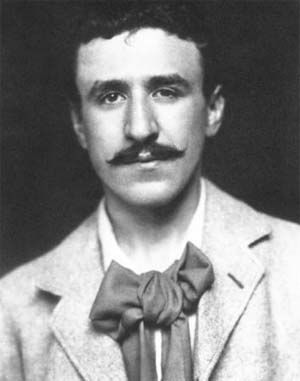
Charles Rennie Mackintosh


Charles Rennie Mackintosh, born on 7th June 1868 in Glasgow is a Scottish architect, designer, water-colourist and artist. He died on 10th December 1928 in London from throat and tongue cancer at the age of 60. He did his designs from Arts and Crafts movement and Art Nouveau.
In 1899, he works for the Honey man and Keppie architectural practice where he first started his major architectural project, the Glasgow Herald Building. After he completed his several building designs, he then became a partner of them in 1907, when his economic hardships were caused by many architectural practices to close in 1913.
He got resigned by them and was attempted to open his own practice. On his extended holiday in Suffolk he started painting his designs with many floral watercolours, he then moved to London where he continued to paint and design textile designs. In 1916, he received a commission to redesign the home of W.J. Bassett-Lowke with his architectural and interior design project.
This is Charles Rennie Mackintosh chair design called the willow chair. I chose this chair because he designed this chair in style of Art Nouveau and he included shapes and patterns in his chair. He made the seat and backrest of this chair as a semi-circle.